진열장의 사물들 (2024)
Showcased Objects
Showcased Objects
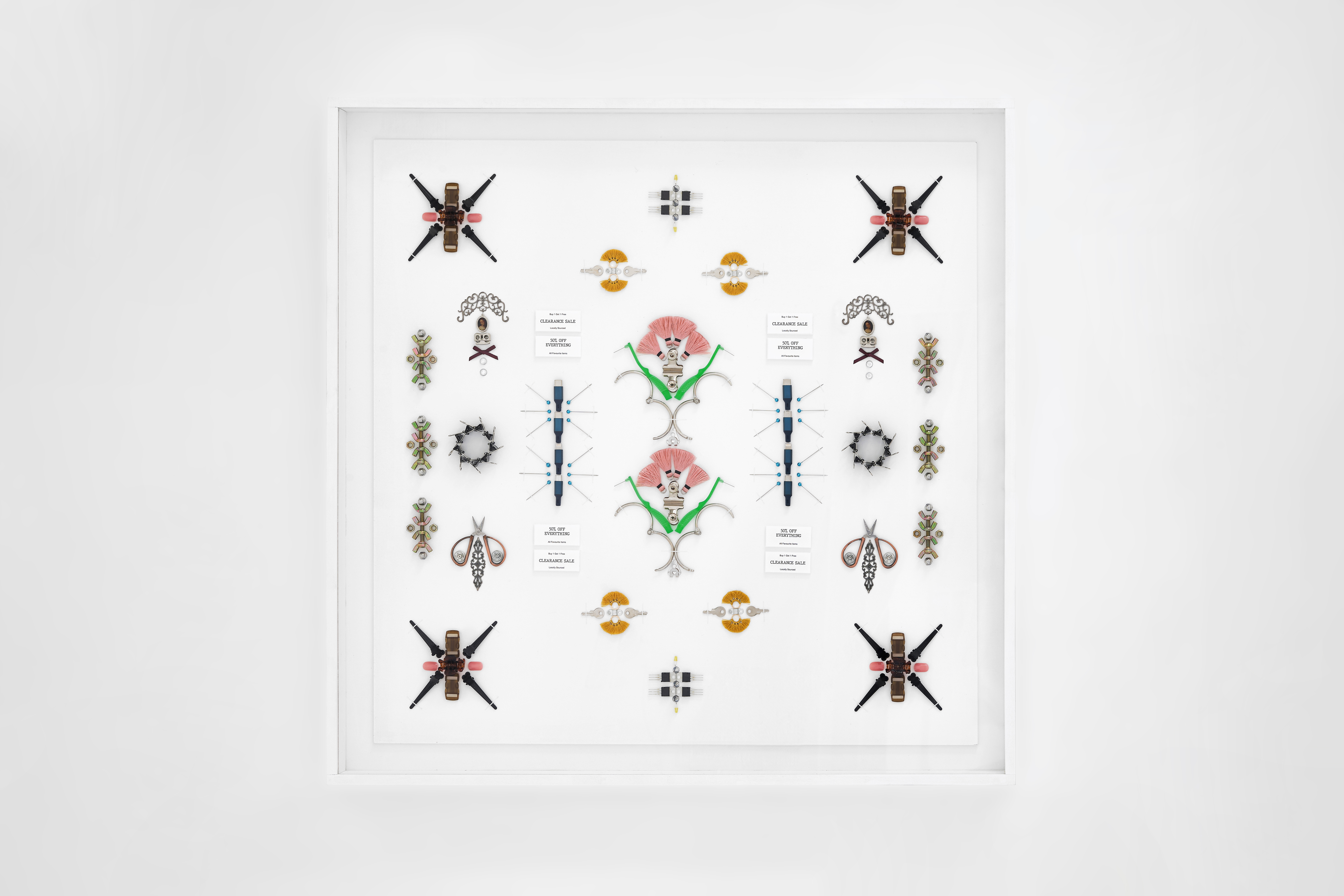
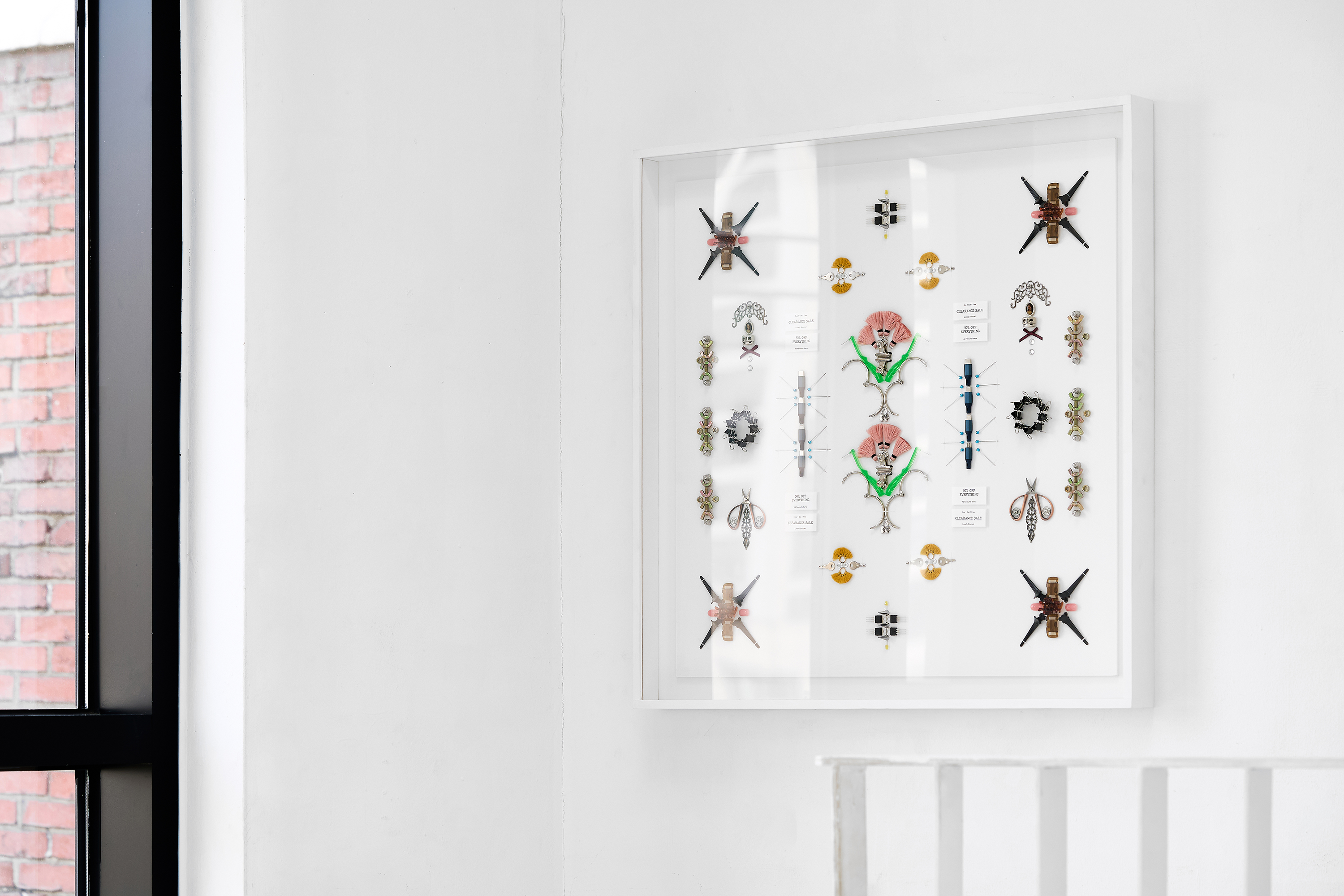
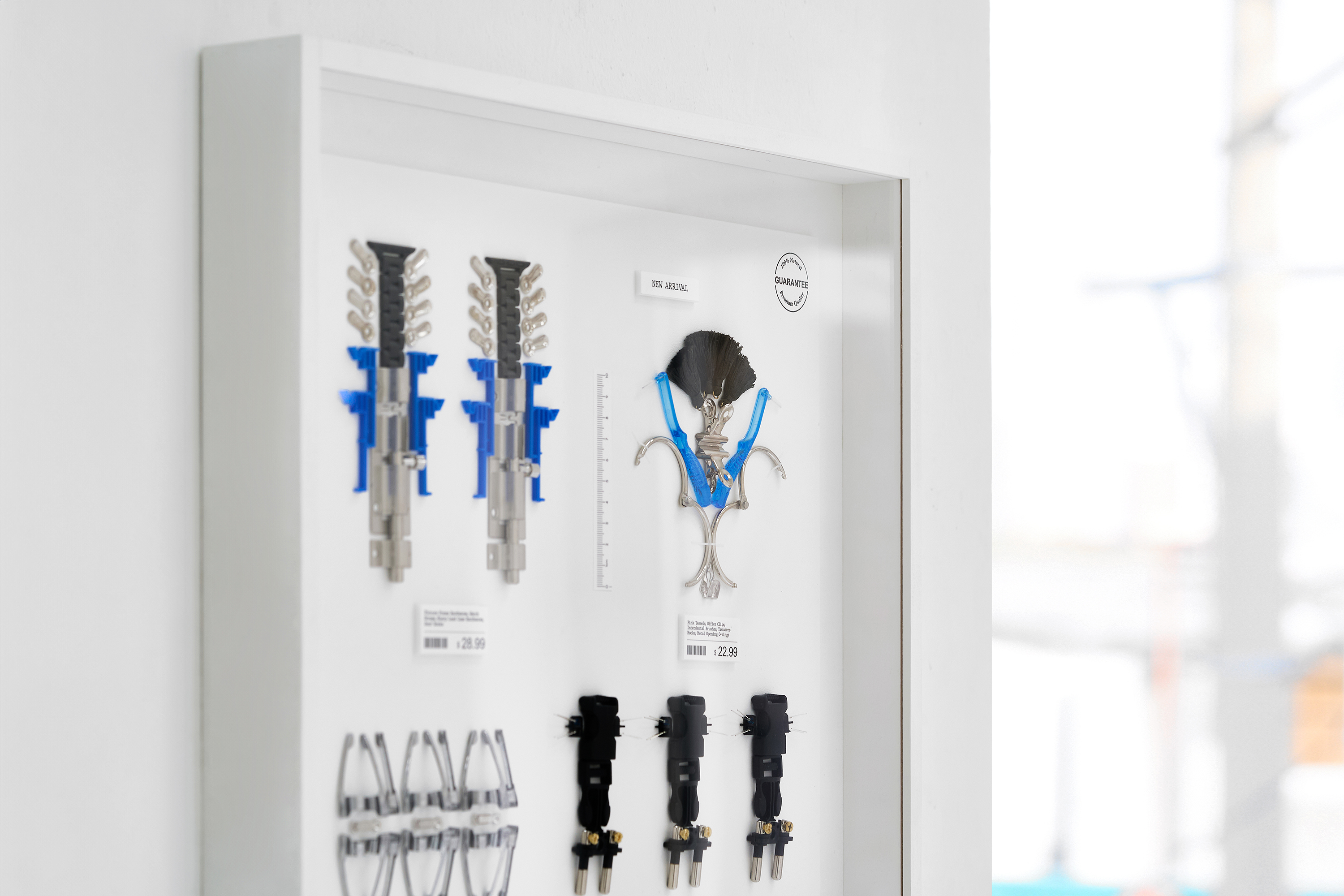
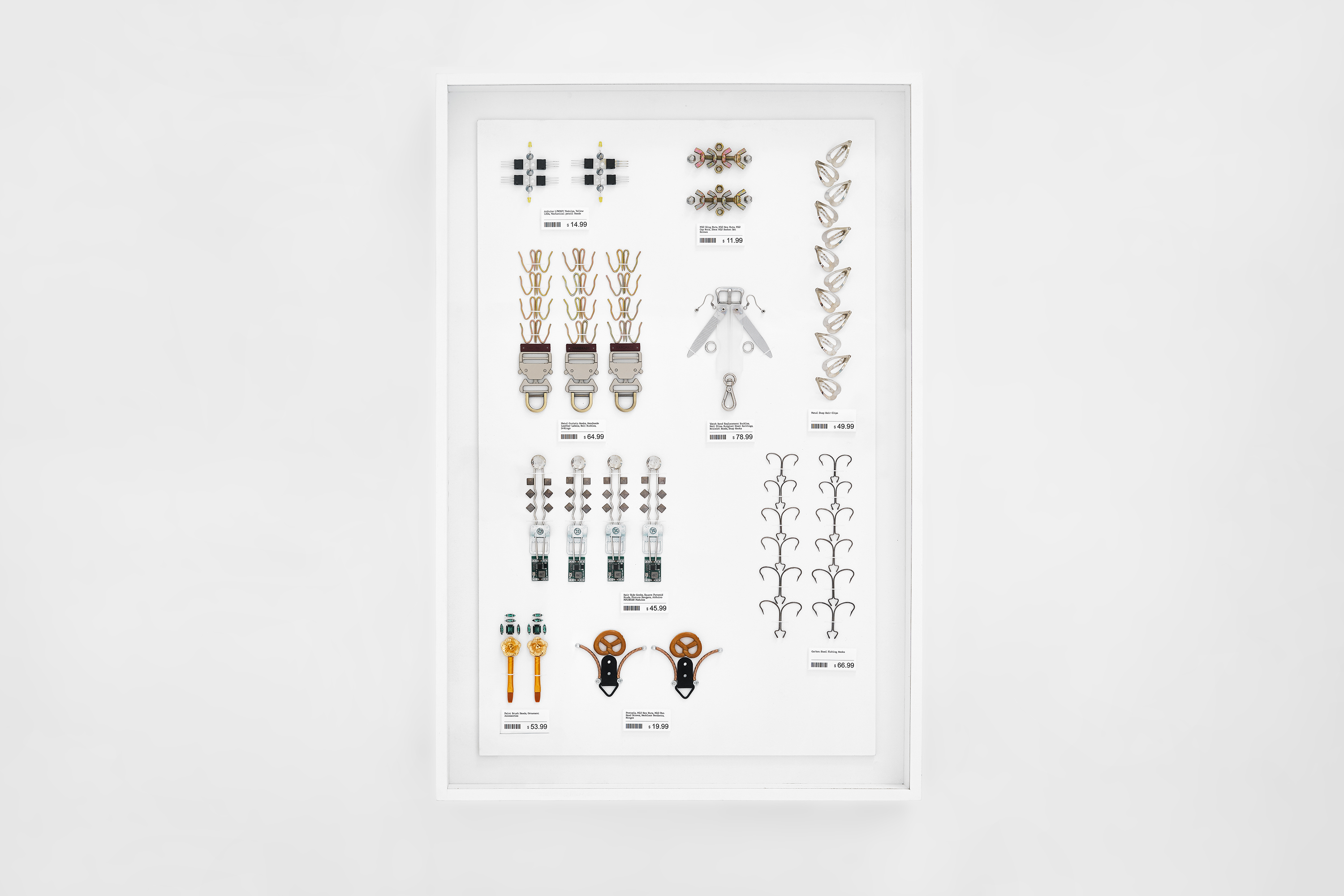
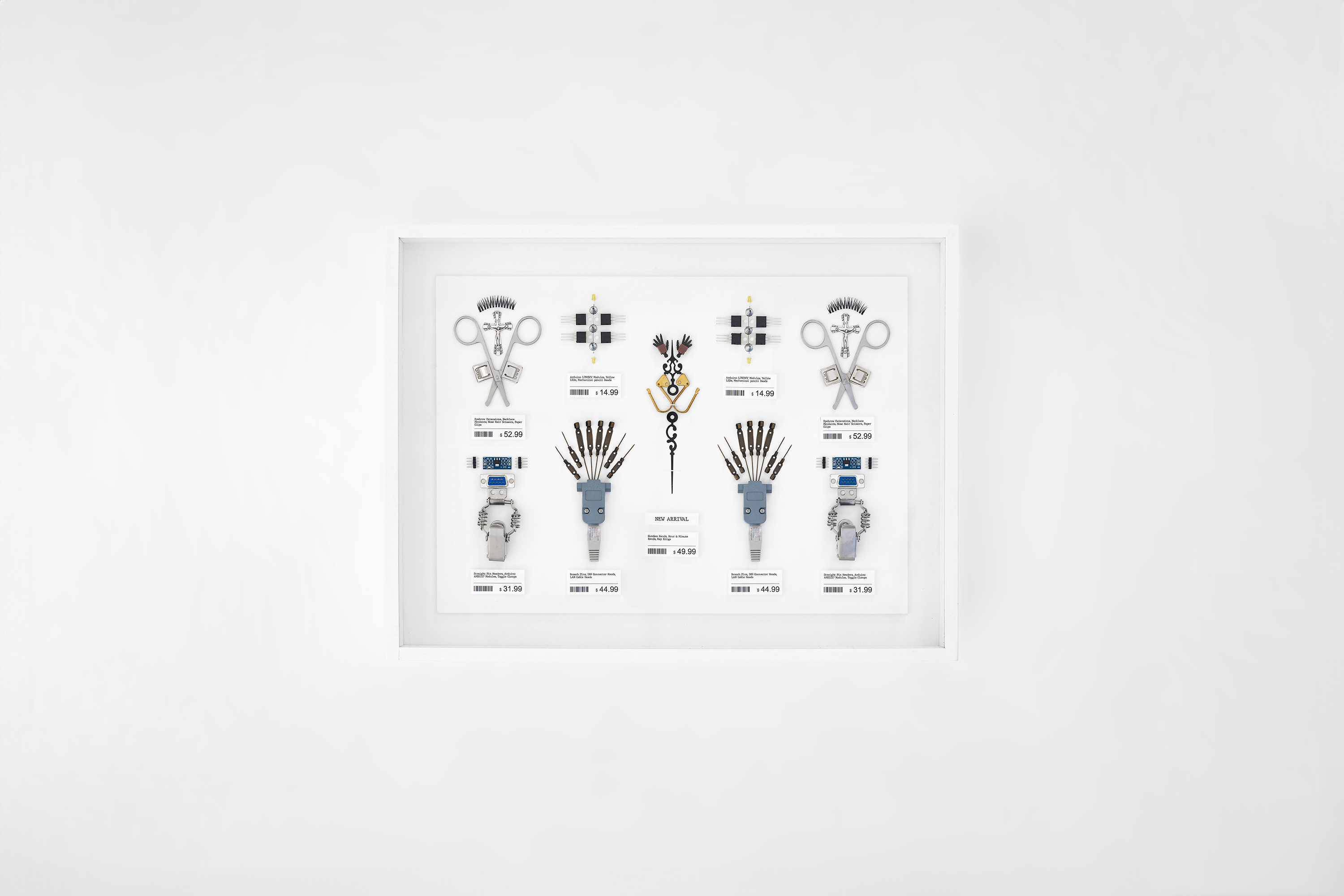
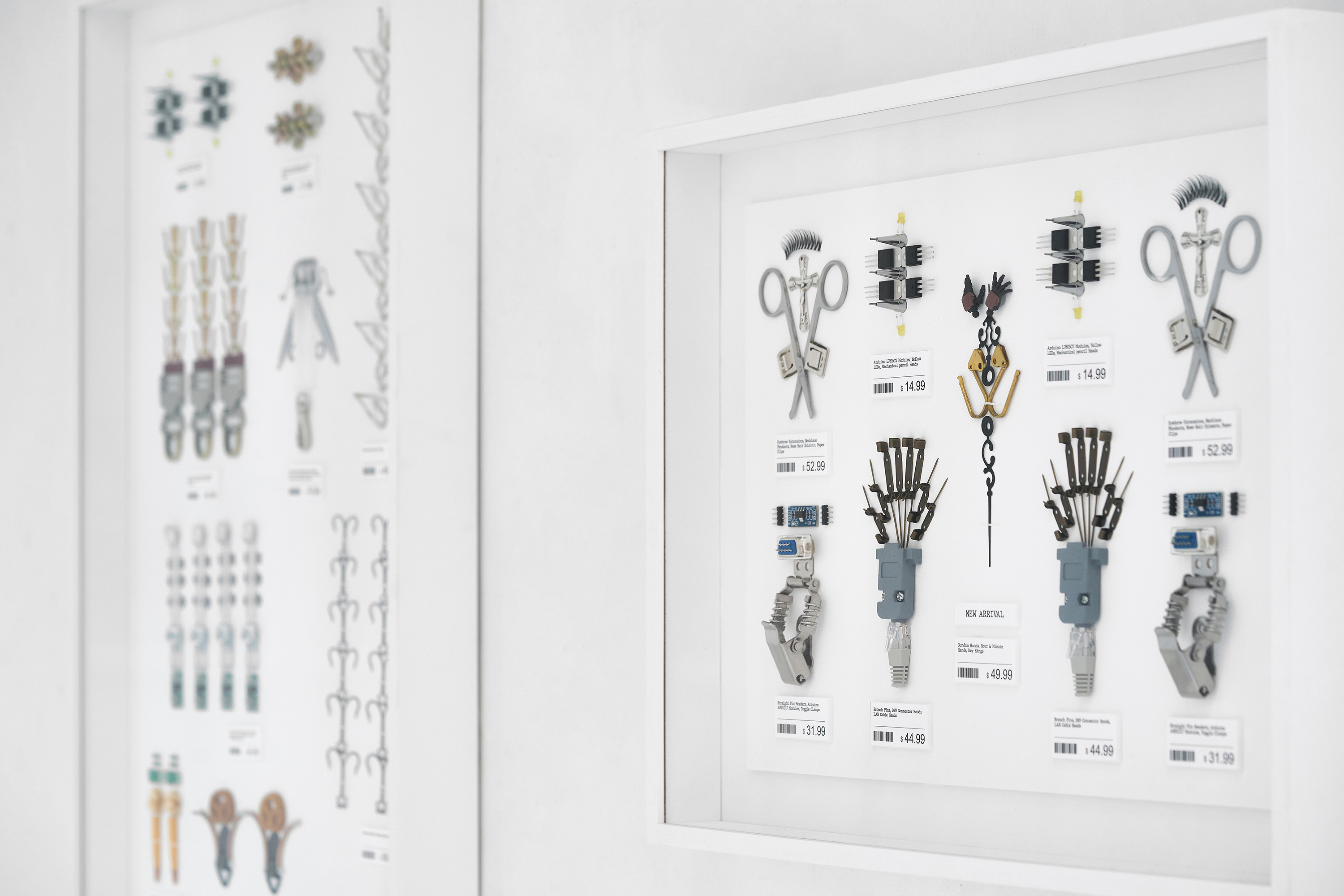
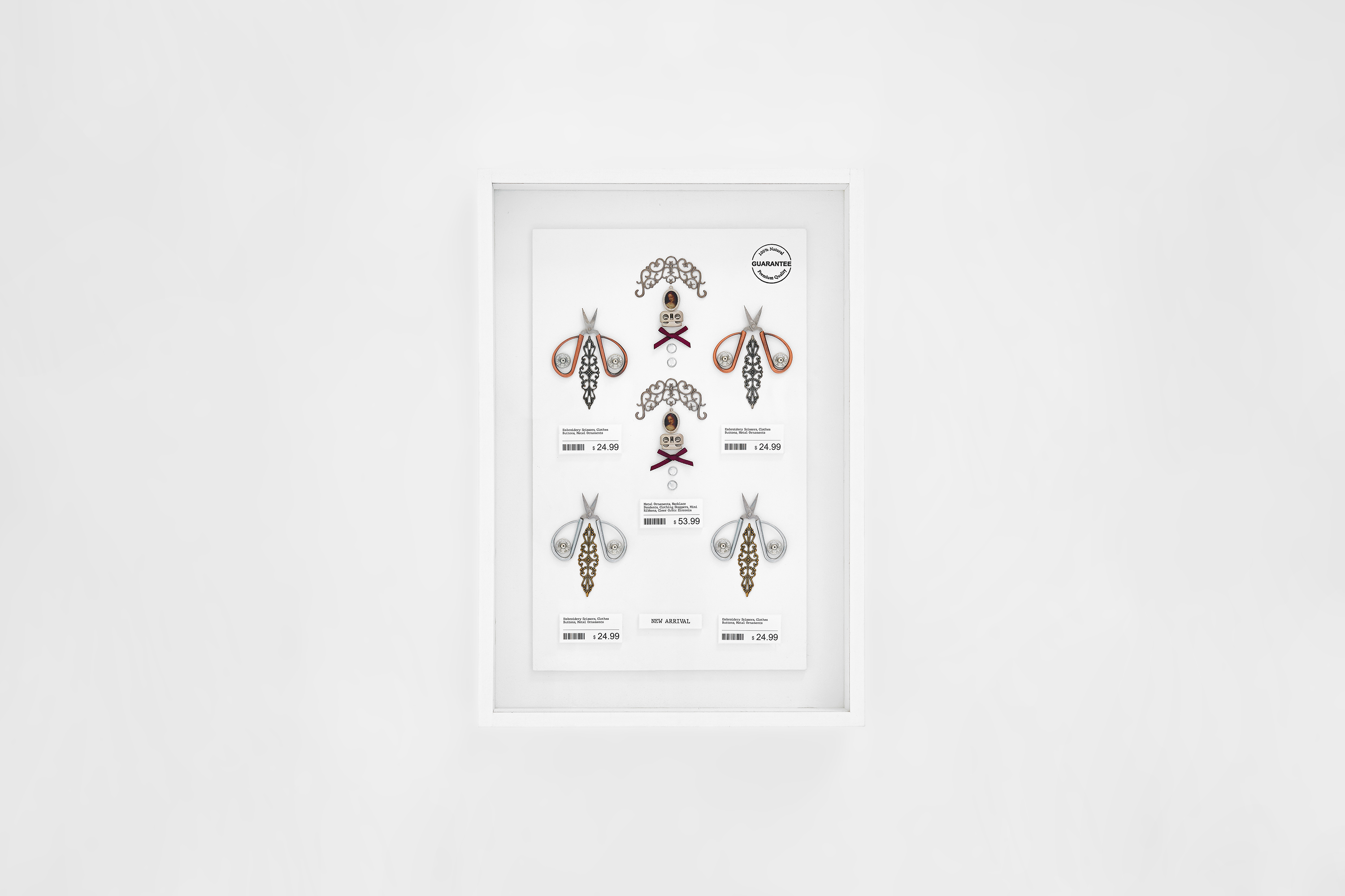
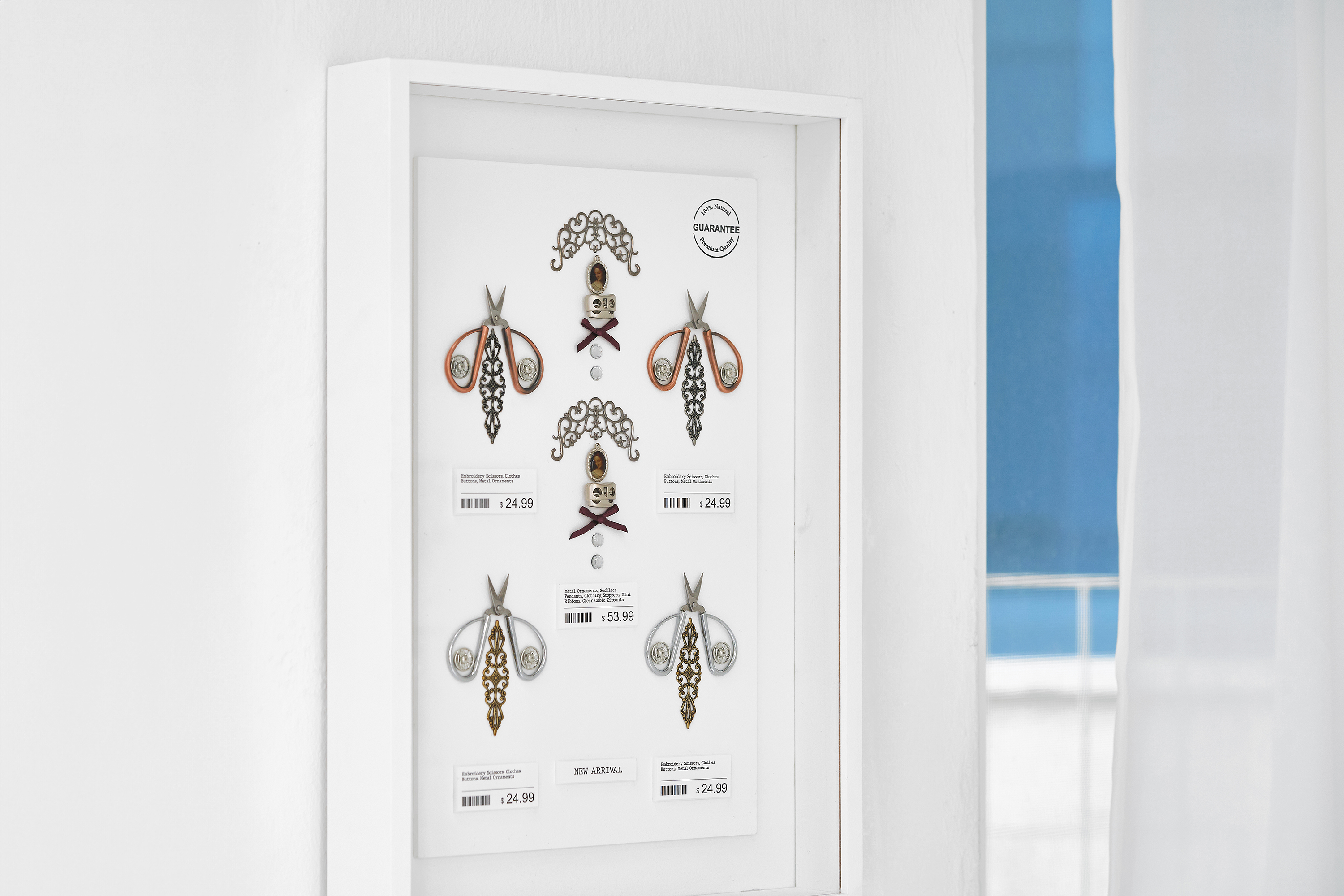
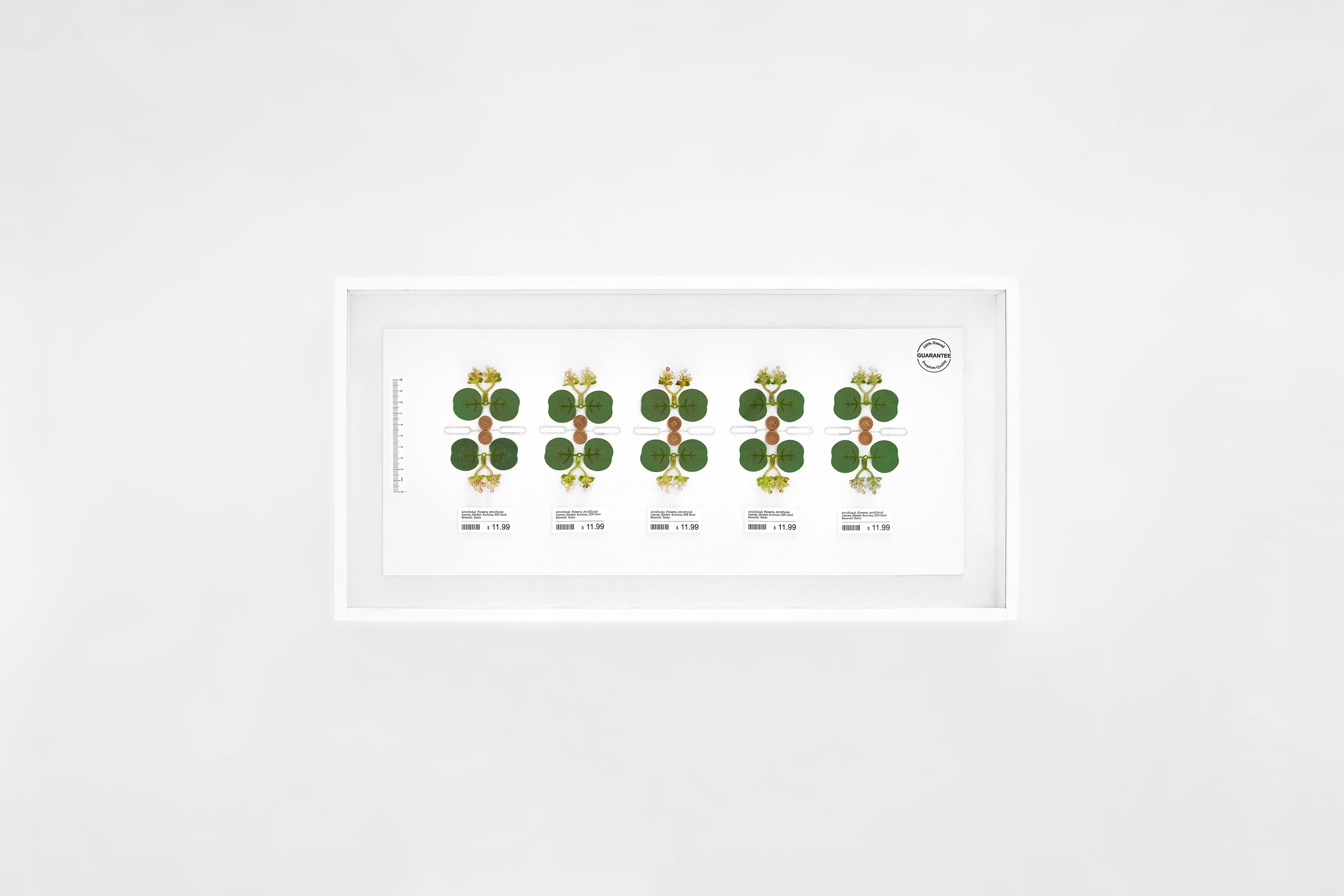
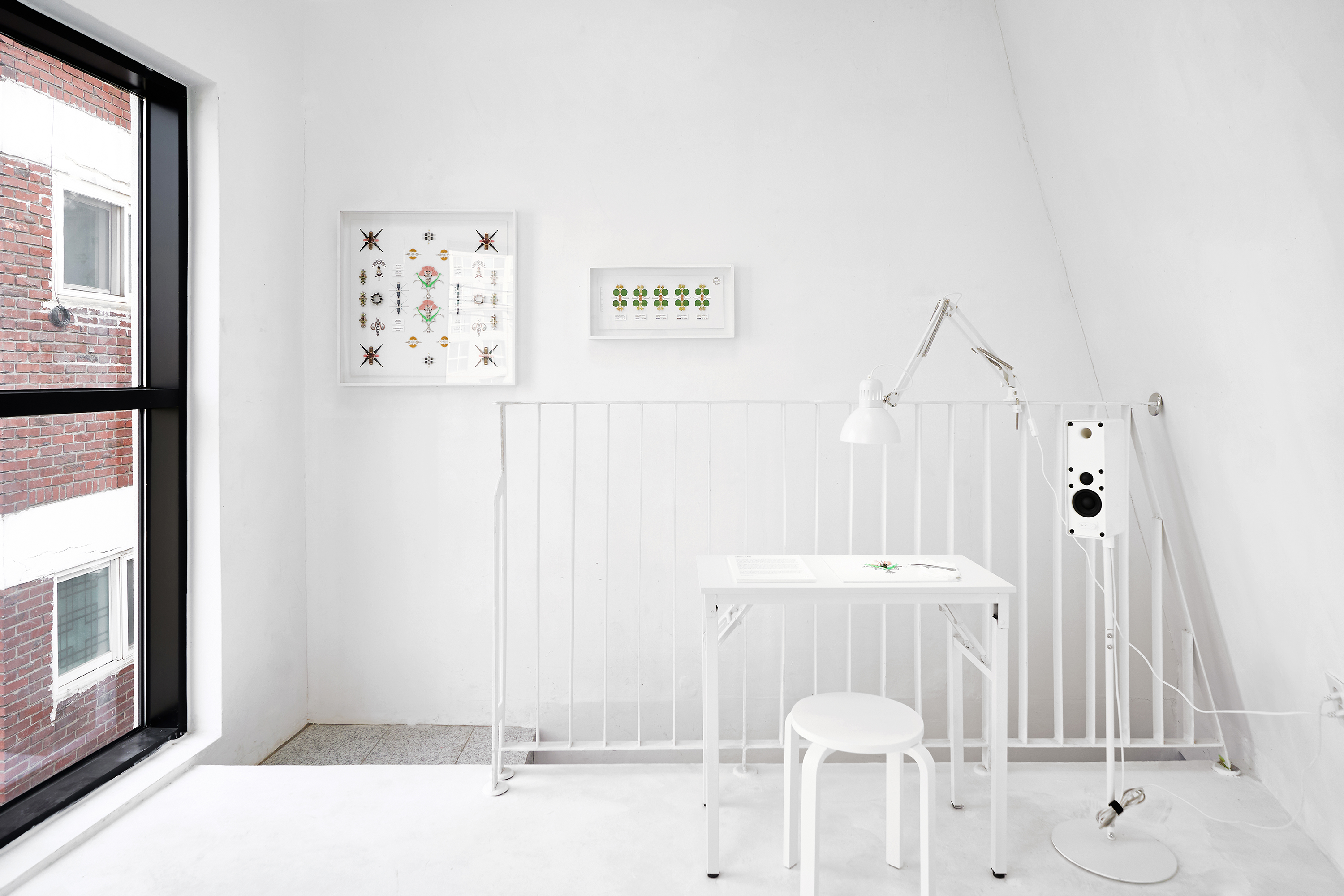
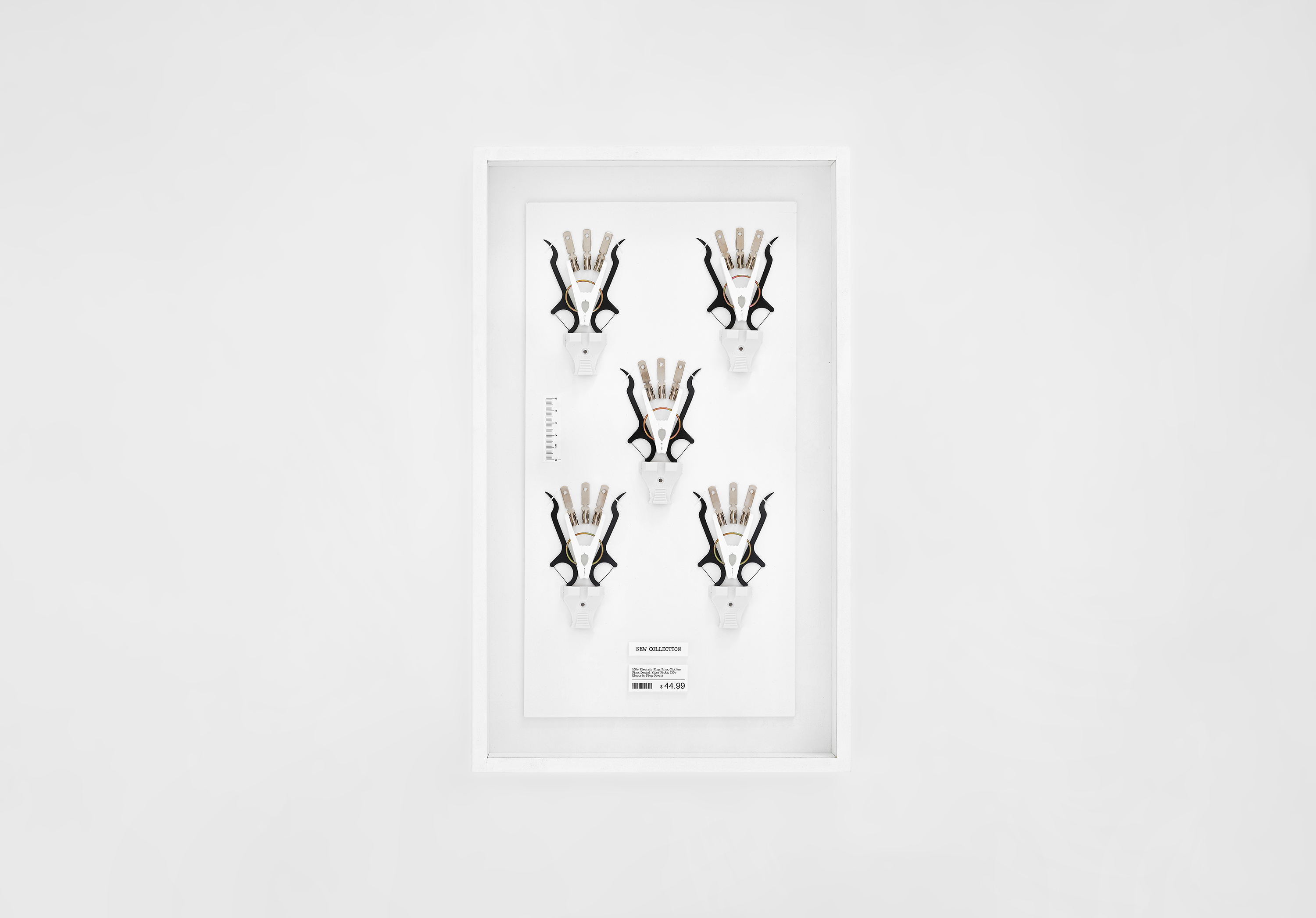
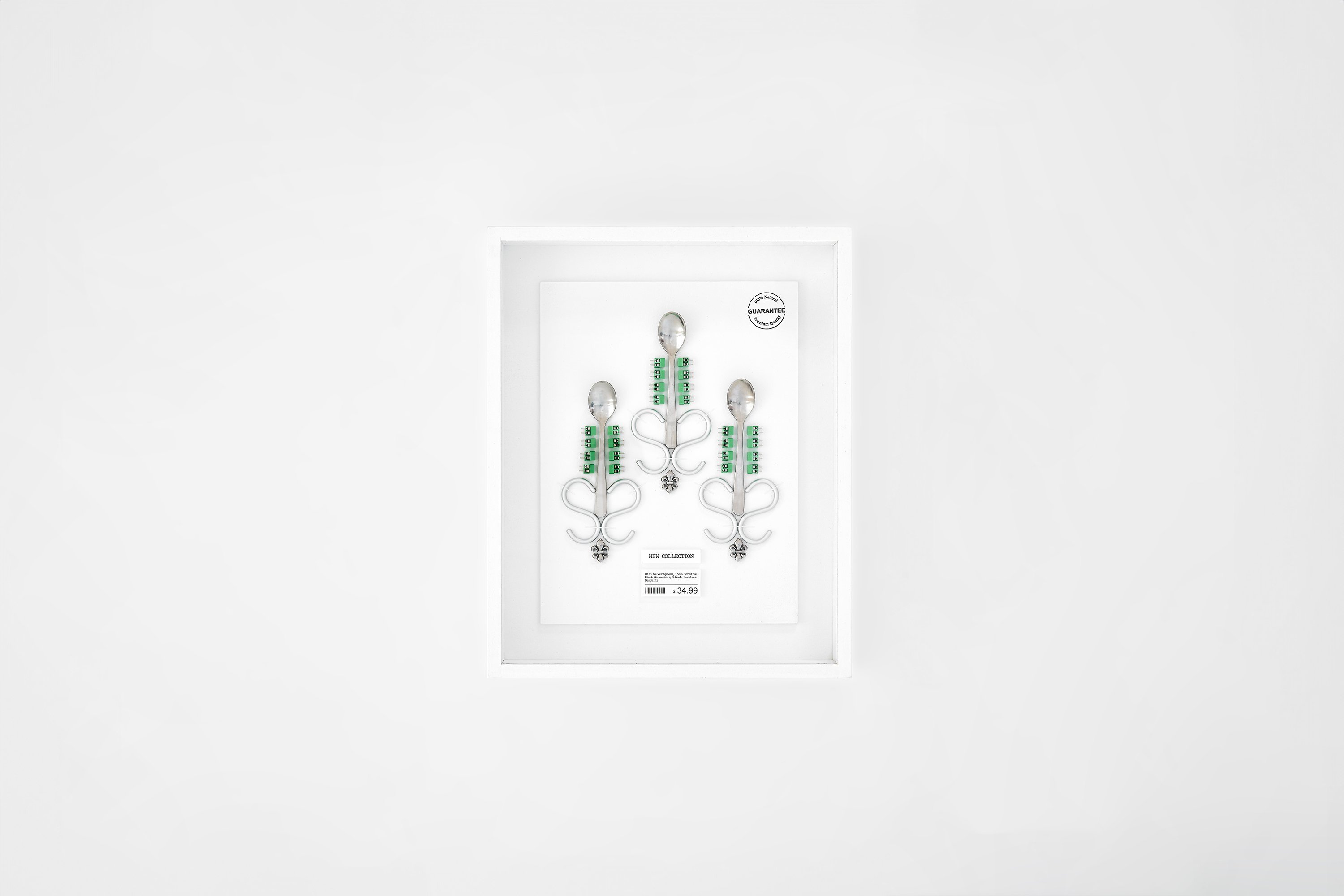
진열장에 가지런히 놓인 사물들이 고객들의 소비를 유혹할 채비를 마치고 침묵과 함께 대기 중이다. 특가 할인이 적힌 가격표와 품질을 인증하는 마크가 곁에서 그들의 유혹을 조력하고 있다. 하지만 그것들을 유심히 바라보니 그 생김새가 곤충과 식물 따위의 생물 표본과 흡사하다. 송장처럼 기능을 잃고 차갑게 식어버린 껍데기 사물들이 전족 작업을 마친 곤충 표본처럼 바닥에 규칙적으로 고정되어 있다.
그것들은 비록 죽어있지만 소비를 통해 단순히 소유되고 착취당하는 인간과의 피지배 관계에서 탈피하여 생물과 동등한 지위와 자격을 얻은 것처럼 당당해 보인다. 혹스(Hox) 유전자를 가진 양향 동물들(Bilateria)처럼 좌우대칭을 한 사물들이 진열된 이 변종적인 모습의 쇼케이스 디스플레이는 인류세 이후 자연과 인공을 구분하는 것의 무의미와 실로 권위적이며 생동적인 사물의 위엄을 동시에 기리는 기념비 같아 보이기도 한다. 반면 특정한 시간대와 장소의 증거가 되는 표본의 관점에서 이것들은 사물 생태계의 생태적 일원으로 공생하는 인류의 현주소를 표상하는 듯하다. 또한 미래의 진화를 예측하는 데이터로도 활용되는 표본의 또 다른 기능적 관점에서 이 하이브리드는 ‘과연 비인간 생물과 사물 중 무엇이 오늘날 인류의 진화를 결정하는가?’라는 질문을 불러일으킨다.
-
Neatly arranged in a display case, the objects stand in silence, poised to entice consumers. Price tags touting discounts and quality seals assist in their appeal. But on closer inspection, they resemble biological specimens—like insects or plants. Cold and functionless like corpses, these shell-like forms lie pinned in neat rows, echoing bound insect specimens.
Though lifeless, they seem oddly dignified—as if they have freed themselves from subjugation and gained a status equal to living organisms. This mutated showcase resembles a monument—celebrating both the collapse of the boundary between nature and artificiality, and the latent power of objects themselves. Viewed as specimens tied to time and place, they reflect humanity’s current state of coexistence in an object ecology. And from another angle—as data used to anticipate future evolution—this hybrid display raises a provocative question: “What drives human evolution today—nonhuman life, or the objects we create?”
그것들은 비록 죽어있지만 소비를 통해 단순히 소유되고 착취당하는 인간과의 피지배 관계에서 탈피하여 생물과 동등한 지위와 자격을 얻은 것처럼 당당해 보인다. 혹스(Hox) 유전자를 가진 양향 동물들(Bilateria)처럼 좌우대칭을 한 사물들이 진열된 이 변종적인 모습의 쇼케이스 디스플레이는 인류세 이후 자연과 인공을 구분하는 것의 무의미와 실로 권위적이며 생동적인 사물의 위엄을 동시에 기리는 기념비 같아 보이기도 한다. 반면 특정한 시간대와 장소의 증거가 되는 표본의 관점에서 이것들은 사물 생태계의 생태적 일원으로 공생하는 인류의 현주소를 표상하는 듯하다. 또한 미래의 진화를 예측하는 데이터로도 활용되는 표본의 또 다른 기능적 관점에서 이 하이브리드는 ‘과연 비인간 생물과 사물 중 무엇이 오늘날 인류의 진화를 결정하는가?’라는 질문을 불러일으킨다.
-
Neatly arranged in a display case, the objects stand in silence, poised to entice consumers. Price tags touting discounts and quality seals assist in their appeal. But on closer inspection, they resemble biological specimens—like insects or plants. Cold and functionless like corpses, these shell-like forms lie pinned in neat rows, echoing bound insect specimens.
Though lifeless, they seem oddly dignified—as if they have freed themselves from subjugation and gained a status equal to living organisms. This mutated showcase resembles a monument—celebrating both the collapse of the boundary between nature and artificiality, and the latent power of objects themselves. Viewed as specimens tied to time and place, they reflect humanity’s current state of coexistence in an object ecology. And from another angle—as data used to anticipate future evolution—this hybrid display raises a provocative question: “What drives human evolution today—nonhuman life, or the objects we create?”